Heating Services Ltd has earned many five-star reviews from customers across Surrey, London and the South East, and you can read them on the review widget on this site. That reputation is built on radiator work done properly: correct sizing, sound joints and a balanced system afterwards.
The Quick Answer
- Radiator installation, replacement, relocation and repair are all handled by the firm's own locally based engineers, never subcontractors.
- New radiators are sized from a room heat loss calculation and matched to the flow temperature your boiler actually runs at.
- Leaks are traced to source using method-based diagnostics including thermal imaging and acoustic tracing, not guesswork.
- Valves, TRVs, bleeding and full lockshield balancing are part of the job, not an extra afterwards.
- Because the engineers are local, a leak or a cold radiator reported today is usually attended the same day.
- Installation work carries a guarantee of up to 10 years, with the scope agreed in writing before anyone starts.
The company was established in 2008 and David, who heads the team, has over 21 years' experience in the trade; all gas work is carried out by Gas Safe registered engineers, and the same team provides gas safe engineer services Staines-upon-Thames homes and businesses rely on.
Tell us what your radiators are doing and an engineer will be booked in, usually the same day.
Radiator installation and radiator repair in Staines-upon-Thames both come down to the same three things: correct sizing for the room, sound connections to the existing pipework, and a system that is balanced once the work is finished. Everything below follows that order.
Call Heating Services Ltd for Radiator Installations & Repair in Staines-upon-Thames and a local engineer will size, fit or repair your radiators and balance the system before leaving.
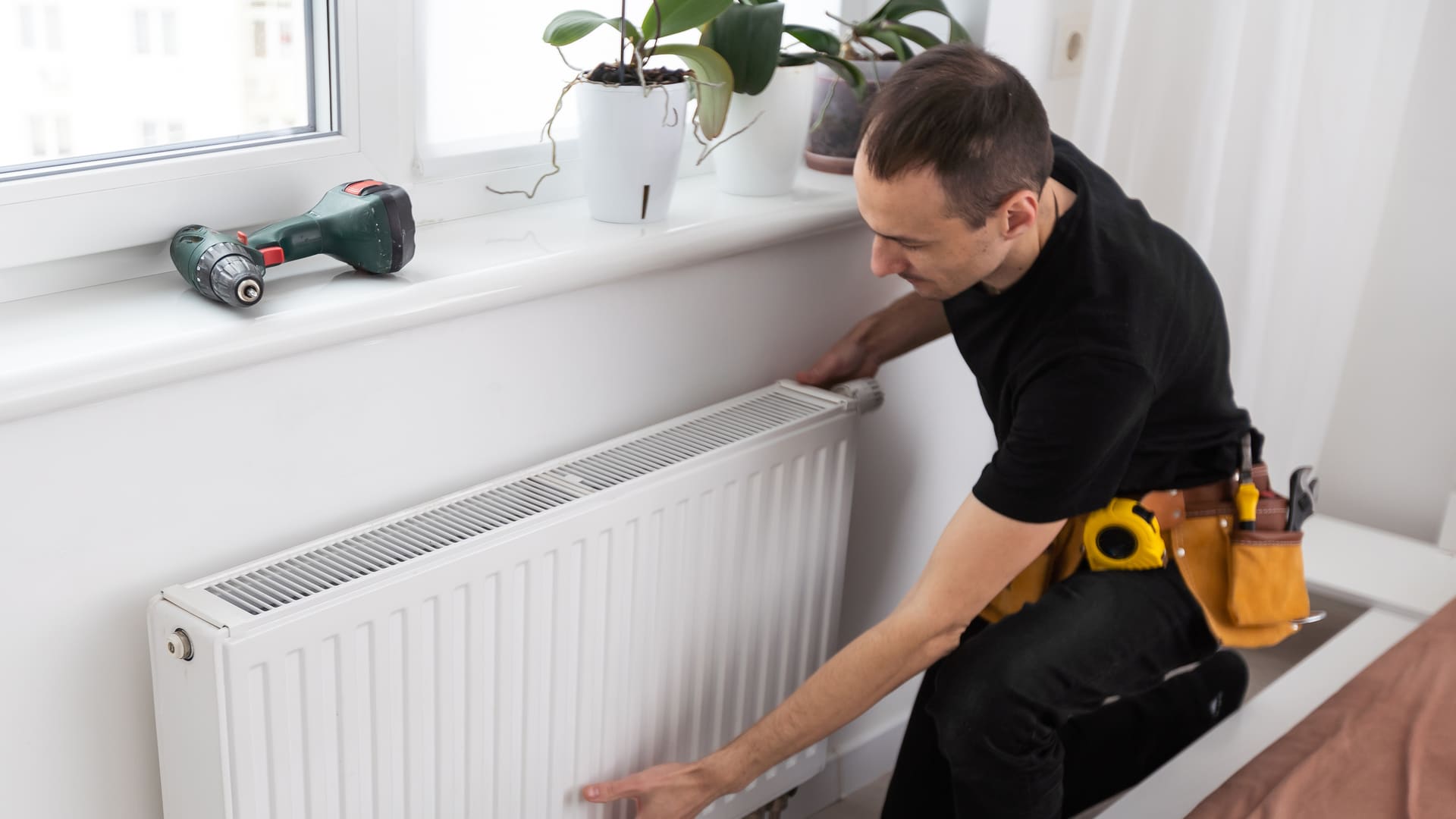
Radiator Installation & Replacement
Sizing before selection
Sizing starts with a heat loss calculation for the room, not with the size of the old radiator. The calculation takes floor area and ceiling height, glazing type, external wall count and insulation level, then returns a required output in watts. That figure is then matched to a radiator output at the flow temperature the system actually runs at, because a manufacturer's stated output is usually quoted at a delta T of 50, and a condensing boiler running lower flow temperatures will deliver less than the headline number. In the taller 3 to 5 storey town-centre buildings along the High Street, upper floors and single-glazed conservation-area windows push that figure up, and undersizing there is the most common reason a new radiator disappoints.
The replacement sequence
A like-for-like replacement on existing tails follows a set order:
- Isolate the boiler or pump, then close the wheelhead valve and count and record the turns on the lockshield before closing it.
- Drain the radiator into a container through the bleed point and valve union, protecting the floor.
- Lift the old unit off its brackets, then check tail height, centres and pipe condition.
- Fit new brackets to the wall, set level and at the correct height for the valve centres, plugged and screwed into masonry or fixed into noggins on stud.
- Fit the new valve tails with PTFE or a suitable jointing compound, hang the radiator, connect both valves and refill slowly.
- Vent, pressurise, run the system up to temperature and re-check every joint hot as well as cold.
Most single-radiator swaps are a two to three hour job where pipe centres match. Where they do not, or where a radiator is being moved to another wall, pipework is altered in copper and the run planned to keep falls and access sensible.
New circuits and added radiators
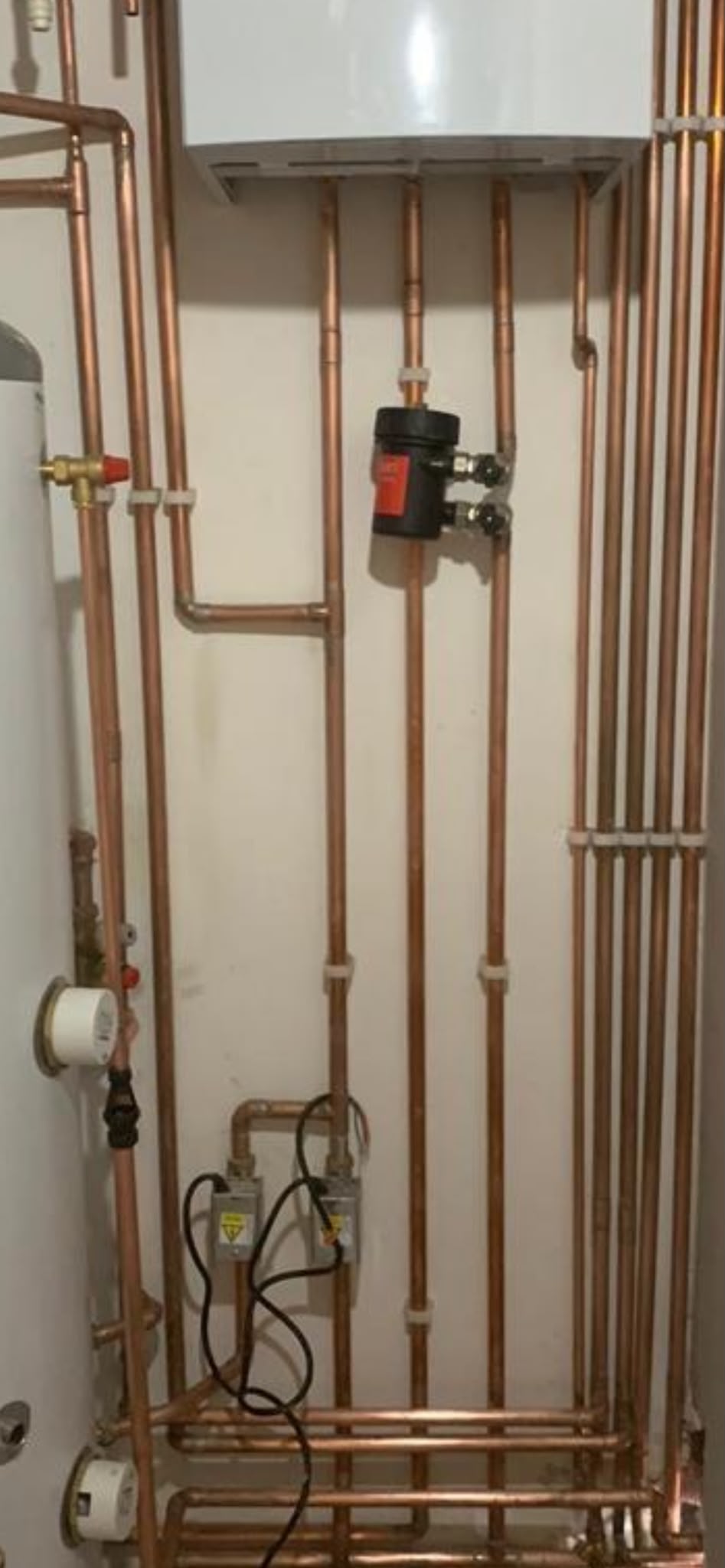
Adding a radiator to an existing circuit means confirming the boiler has spare output and the pump has head to spare, then teeing into a suitable branch rather than the nearest convenient pipe. On sealed systems the expansion vessel and fill pressure are checked afterwards, since extra system volume changes both. Radiator work and boiler work sit together here, so if the existing appliance is at its limit the team will say so rather than fit and hope.
If you need Quotes for radiator fitting as well, that is work we do.
Callout, Availability and Quotes in Staines-upon-Thames
How quickly an engineer reaches you
The engineers are based locally rather than dispatched across the county, which is why a leaking radiator reported in the morning is usually attended the same day. Same-day attendance for breakdowns and leaks is the part of the work this firm is best known for, and the reason is simple logistics: local people, short journeys, vans stocked with valves, tails, brackets and bleed fittings.
Quotes and scope
Quotes for radiator fitting are given against a defined scope: the number of units, valve type, whether pipework is being altered or extended, and whether the system needs a chemical flush or inhibitor top-up afterwards. Written scope before work starts is what prevents the mid-job surprise, and it is also what makes a guarantee of up to 10 years on installation work meaningful rather than decorative. Whether you are in Staines-upon-Thames or Cheshunt, we cover the whole area, and radiator repair in Cheshunt is handled by the same team to the same standard.
Coverage across the town
Work is carried out across Staines-upon-Thames and the surrounding TW18 area, from riverside flats and apartment-led regeneration blocks to older semi-detached and terraced housing. Commercial and hospitality premises are covered too, including hotels and managed retail units where a cold radiator in a guest room or a public area cannot wait.
Radiator Repair and Leak Fixing
Finding the actual source
Water tracks, so the wet patch is rarely the fault. Diagnosis works up from the floor: valve union, gland nut, tail thread, bleed plug, blanking plug, then the panel seam or a pinhole from internal corrosion. Thermal imaging is used to read surface temperature across a panel and along pipe runs, which shows sludge accumulation and cold zones without lifting floors, and acoustic listening helps trace a weeping joint buried in a boxed pipe run.
What is repaired and what is replaced
Gland leaks are usually cured by repacking or replacing the valve. A weeping tail is remade. A perforated panel is not repaired: internal corrosion means the steel has thinned, and a patched panel fails again, so the unit is replaced. That distinction is given before any work is charged.
Cold radiators
Cold at the top is air or gas in the panel and points to venting and, if it returns, to hydrogen from corrosion and a missing inhibitor. Cold at the bottom with a hot top is magnetite sludge settling in the waterway, which is addressed with removal and flushing of the unit or a full system flush with a magnetic filter fitted afterwards. A radiator cold from end to end with a hot valve body is usually a seized pin in a thermostatic head.
Safe Fitting and Heating System Compatibility in Staines-upon-Thames
Gas Safe work and where it applies
Radiator work itself is wet-side plumbing, but anything touching the boiler, its controls or its combustion side is gas work and is carried out only by Gas Safe registered engineers, as the Gas Safe Register sets out for work on gas appliances. That matters when a radiator addition affects boiler load, when a system is converted from open-vented to sealed, or when controls are rewired.
System type and water quality
Compatibility is checked before parts are ordered. Open-vented systems on gravity primaries behave differently from sealed pressurised systems, and mixing aluminium radiators with older steel and copper without correct inhibitor invites galvanic problems. System water is dosed to the correct inhibitor concentration after any drain-down, and older systems that have never been flushed are tested for sludge loading first.
Related heating work in the same property
Whether you need radiator installations & repair in Staines-upon-Thames or an immersion heater in Staines-upon-Thames, the same local team covers the whole area, which keeps one accountable set of engineers across the heating and hot water side of a property.
Valves, TRVs, Bleeding and Balancing
Valve replacement without draining the system
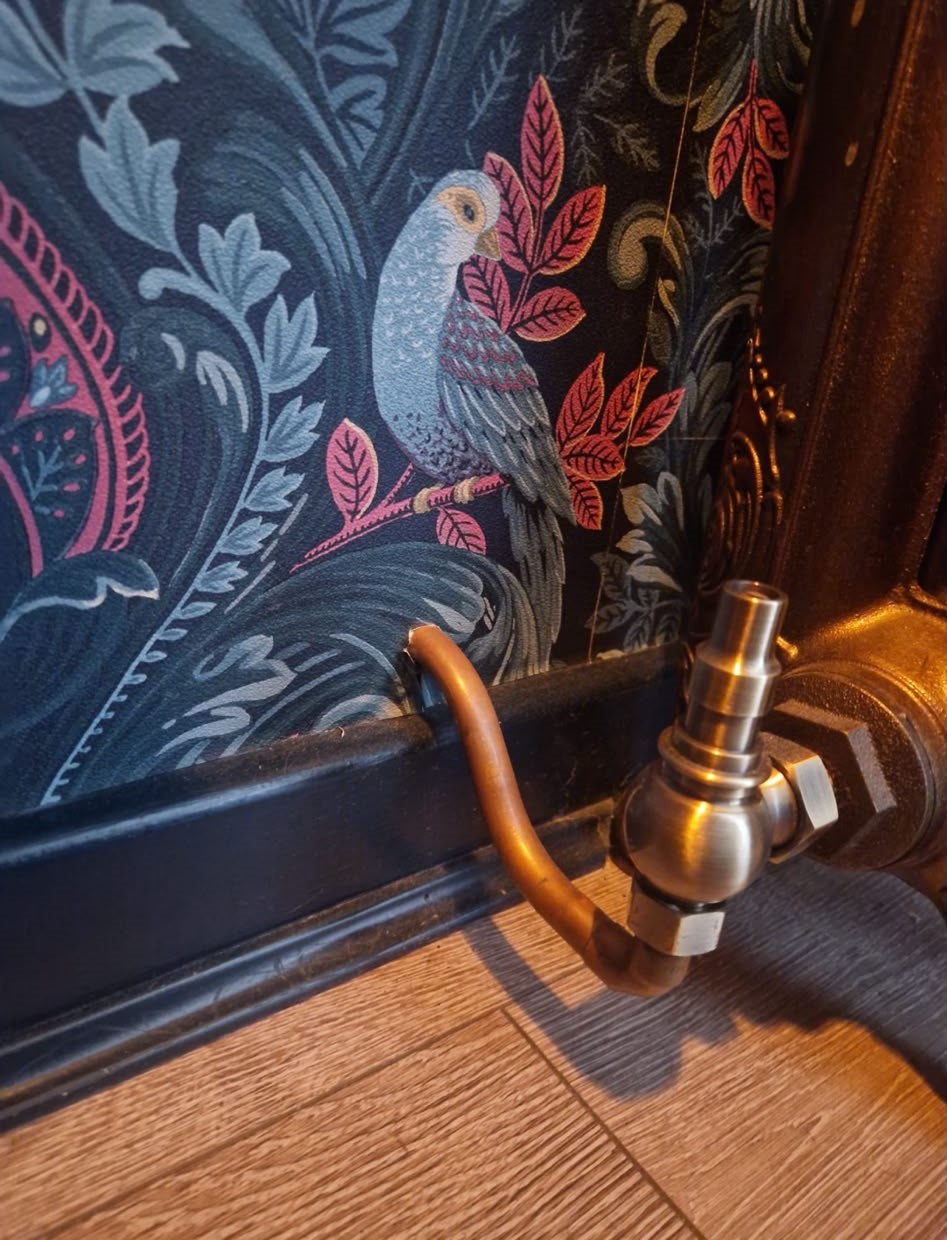
On many jobs a valve is swapped using a pipe freezing kit on the tail, which avoids draining a full system in a block of flats. Where that is not viable the circuit is isolated and drained down properly. Thermostatic radiator valves are fitted with the head clear of the radiator's own heat plume, and bidirectional bodies are used where flow direction is uncertain.
Bleeding, in order
Bleeding is done with the pump off and the system cool, starting with the lowest radiator on the ground floor and working upwards, opening each bleed screw a quarter turn until water runs steadily. Pressure is then restored to roughly 1 to 1.5 bar cold on a sealed system and the sequence repeated if air returns.
Balancing with a differential
Balancing sets each lockshield so every radiator reaches temperature at a similar rate. Flow and return temperatures are read at each unit and lockshields adjusted to hold a consistent differential, commonly around 11 to 12 degrees across the radiator, opening the far radiators and throttling those closest to the pump. Skipping this step is why a newly fitted radiator can leave the rest of the house lukewarm.
Radiator Types and Upgrades
Panel, column, designer and towel rails
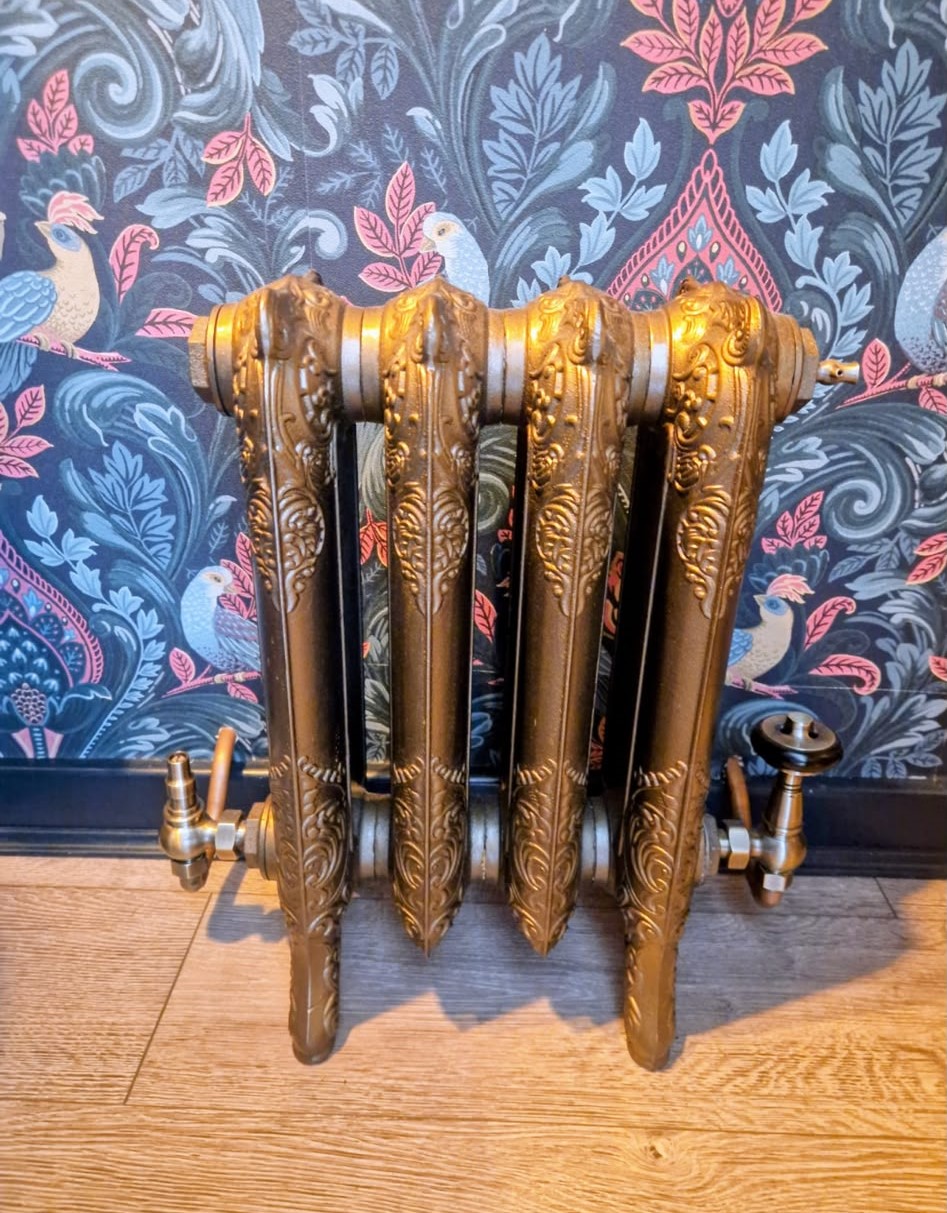
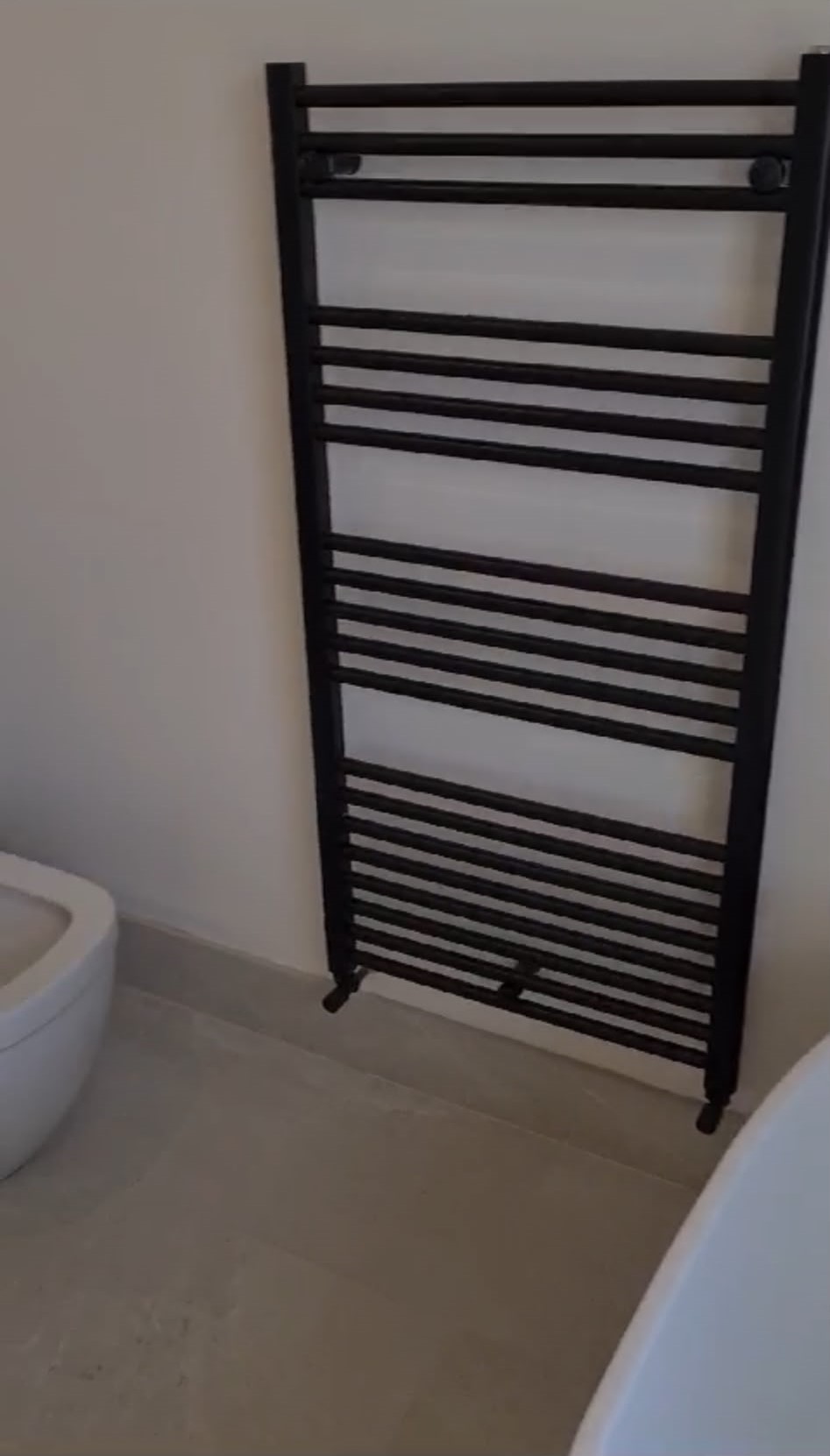
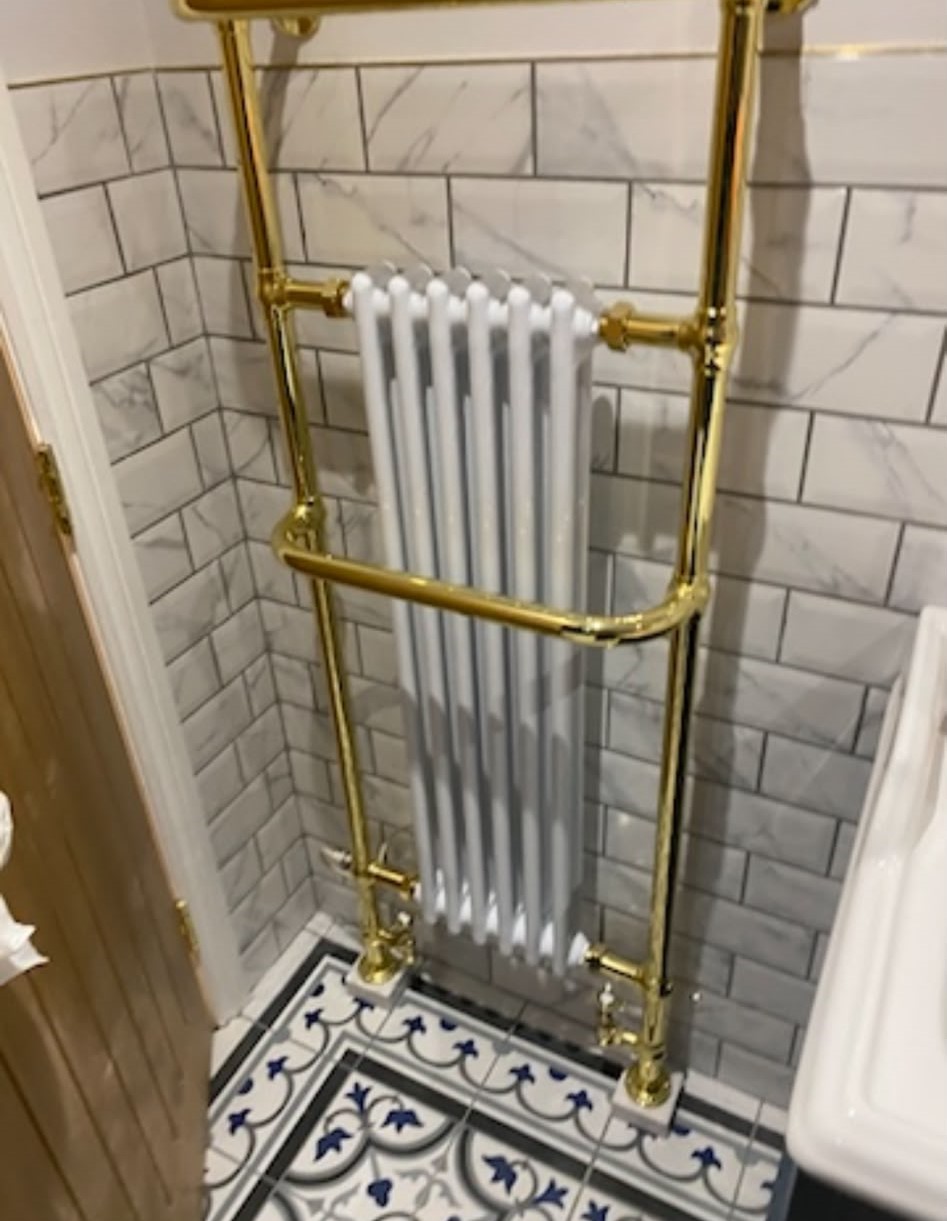
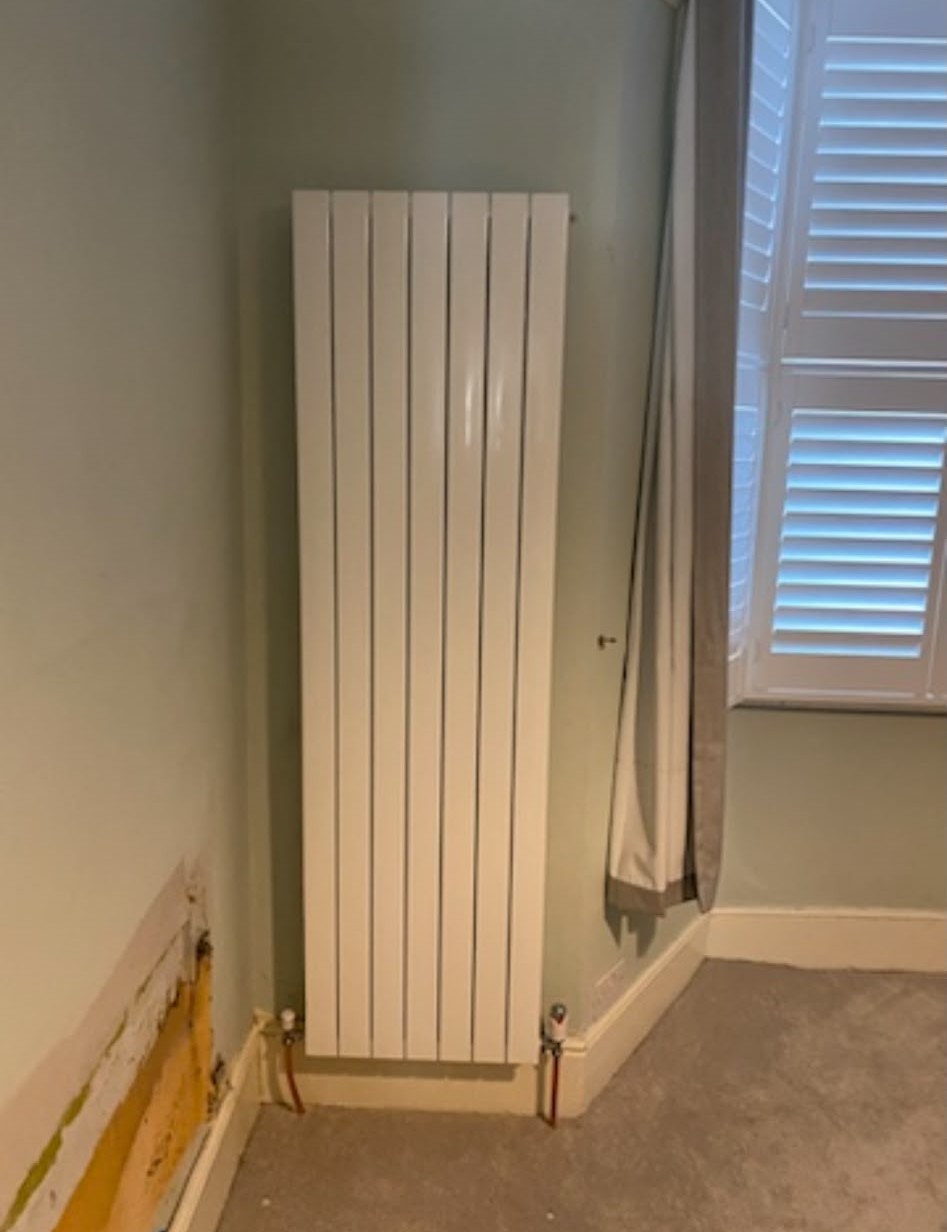
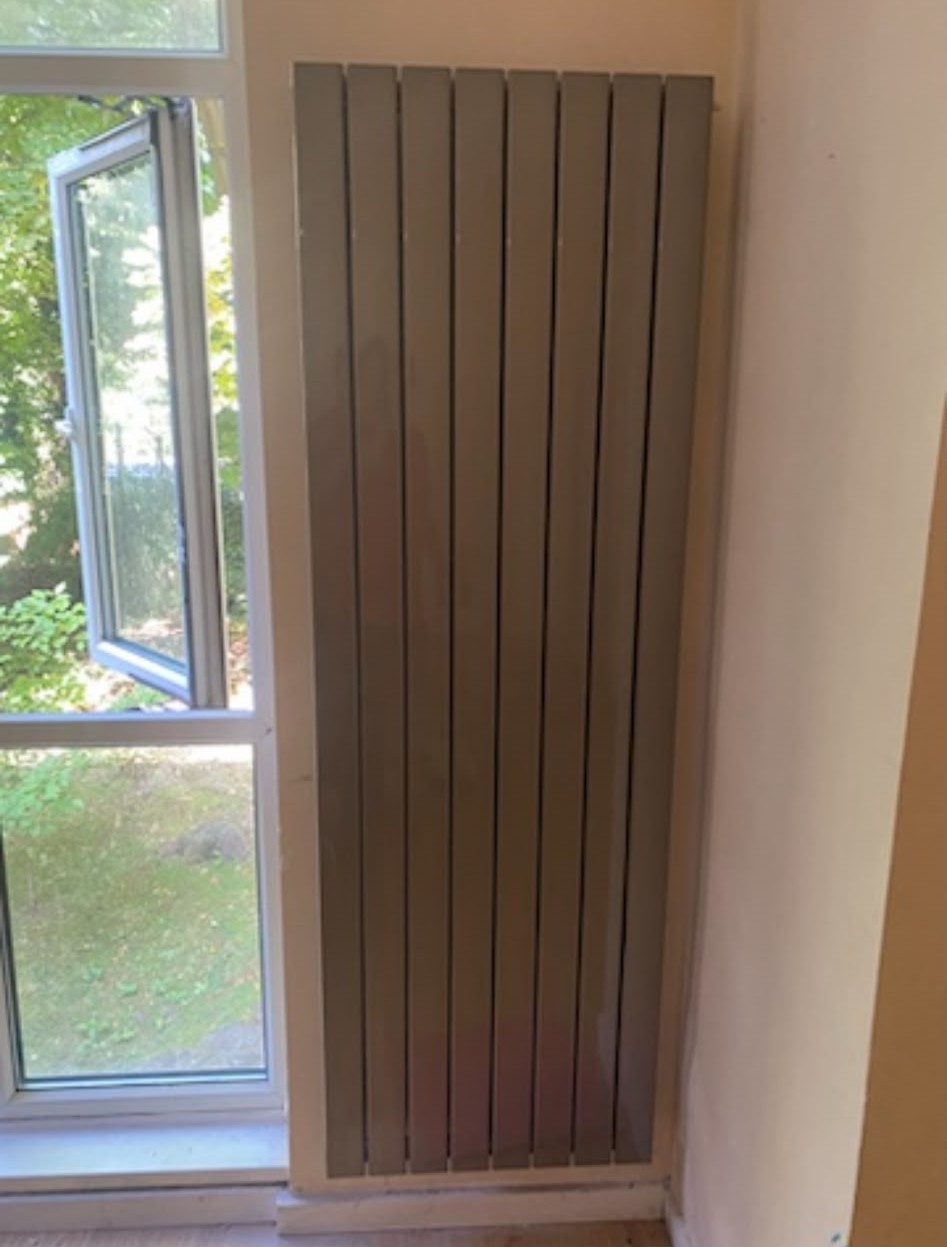
Single panel, double panel and double panel double convector units cover most rooms, with the convector fins doing the work in a modern insulated space. Column radiators suit period rooms in the conservation area near the river and hold more water, so they respond more slowly but hold heat longer. Vertical designer panels are used where wall space is limited in town-centre flats, and towel rails in bathrooms are sized on output, not looks, since a heated rail alone rarely meets a bathroom's heat requirement.
Low temperature upgrades
Where a boiler is being run at lower flow temperatures for efficiency, radiator surface area has to increase to deliver the same output. In practice that means stepping a single panel up to a double, or going wider rather than taller. Existing pipework is checked for microbore restrictions before larger units are specified.
Working alongside your boiler
David heads a team of local expert heating engineers, and the firm has been established since 2008, with David bringing over 21 years' experience in the trade to how the work is specified and checked. Whether you need radiator installations & repair in Staines-upon-Thames or boiler repair services Staines-upon-Thames covers, the same engineers handle both, so a radiator fault caused by the appliance is not left as somebody else's problem.
Call Heating Services Ltd for Radiator Installations & Repair in Staines-upon-Thames and a local engineer will size, fit or repair your radiators and balance the system before leaving.
Radiator Installations & Repair in Staines-upon-Thames FAQs
How much do plumbers charge to install a new radiator?
It depends on scope rather than a flat rate: a like-for-like swap onto existing tails is a short job, while relocating a radiator to another wall means new copper pipework and takes longer. We set out the number of units, valve type and any pipework alterations in a written quote before work begins, so the figure you agree is the figure for the job.
Can a plumber fix radiators, or do I need a Gas Safe engineer?
Radiator panels, valves and pipework are wet-side plumbing. Anything touching the boiler, its controls or its combustion side is gas work and must be done by a Gas Safe registered engineer. Because the team covers both, a radiator fault traced back to the appliance is dealt with on the same visit rather than passed on.
Can you replace old radiators with new ones in a Staines-upon-Thames property?
Yes, and it is one of the most common jobs in the town. Older semi-detached and terraced houses often have oversized single panels on microbore, while the newer apartment blocks in the town centre have modern sealed systems. We check pipe centres, tail heights and system type first, then size the replacement from the room's heat loss.
How quickly can you get to me in Staines-upon-Thames?
The engineers covering Staines-upon-Thames and the surrounding TW18 area are locally based, so a leak or a dead radiator reported in the morning is usually attended the same day. Call and we will get someone out to you as soon as we can.
Can you work on radiators in flats and conservation-area properties near the river?
Yes. In apartment blocks we often use a pipe freezing kit so a valve can be changed without draining a whole system. In the conservation area and around the historic High Street, column radiators and older pipework are common, and the work is planned to suit the building rather than forced to fit a standard method.
Is radiator work guaranteed?
Installation work carries a guarantee of up to 10 years. Repairs are explained before they are charged, including the cases where a panel has corroded internally and replacement is the honest answer instead of a patch that will weep again.