A slow sink is an annoyance; a gully full of sewage outside the back door is a different problem, and knowing which one you have saves time and mess. This guide draws on the drain cleaning our engineers carry out across Surrey, London and the South East.
At a Glance
- The plunger, trap and drain snake routine for sink and shower blockages
- Which chemical and hot water shortcuts can damage pipes or hurt you
- How to tell a simple blockage from a main drain problem
- The warning signs that point to a cracked or collapsed pipe
- What decides whether a DIY fix will work in your home
Heating Services Ltd is a Gas Safe registered firm that has worked across the area since 2008, with its own locally based engineers rather than subcontractors. From routine drain cleaning to drainage in Cheshunt, the same team covers the whole area.
Tell Heating Services Ltd what your drain is doing today and get a clear written quote from an engineer working across Surrey, London and the South East.
Can I unblock a drain myself?
Yes, you can unblock a drain yourself in many cases: a sink, shower or bath blockage near the plughole usually clears with a plunger, hot water or by cleaning the trap. If the blockage sits in the outside drain, keeps coming back, or sewage is backing up, stop and call a drainage engineer.
Drain still backing up after the plunger and the snake? Get in touch with Heating Services Ltd and an engineer will find the cause and put it right.
Unblocking a drain step by step
Start with the simplest method and work up. Most indoor blockages are a plug of hair, soap, fat and food sitting close to the plughole, and they come out with patience rather than force.
- Clear what you can see. Lift out the plug or strainer and pull away hair and gunk and grime by hand, wearing gloves.
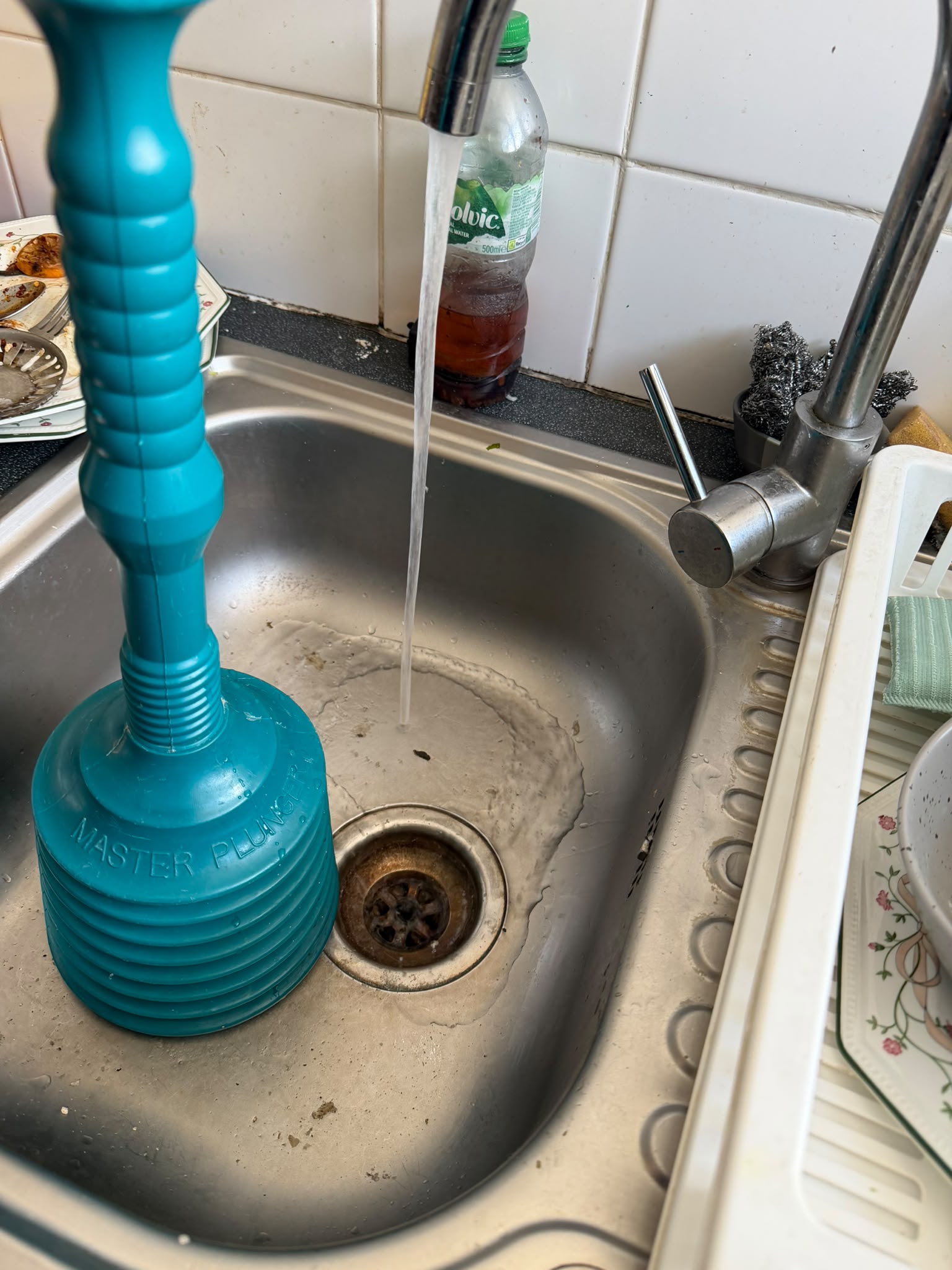
- Use a plunger. Cover the overflow with a damp cloth, leave a few centimetres of standing water in the basin, seal the cup over the plughole and pump firmly a dozen or so times. For a toilet, use a flanged plunger made for toilets.
- Pour hot water. Hot tap water, or a kettle left to cool slightly, softens grease in a kitchen sink.
- Try bicarbonate of soda and white vinegar. Half a cup of each, left for twenty minutes, then flushed with hot water. It helps with light grease and smells but will not shift a solid blockage.
- Clean the u-bend. Put a bucket underneath, unscrew the trap by hand, empty and rinse it, then refit it and check the seals for drips.
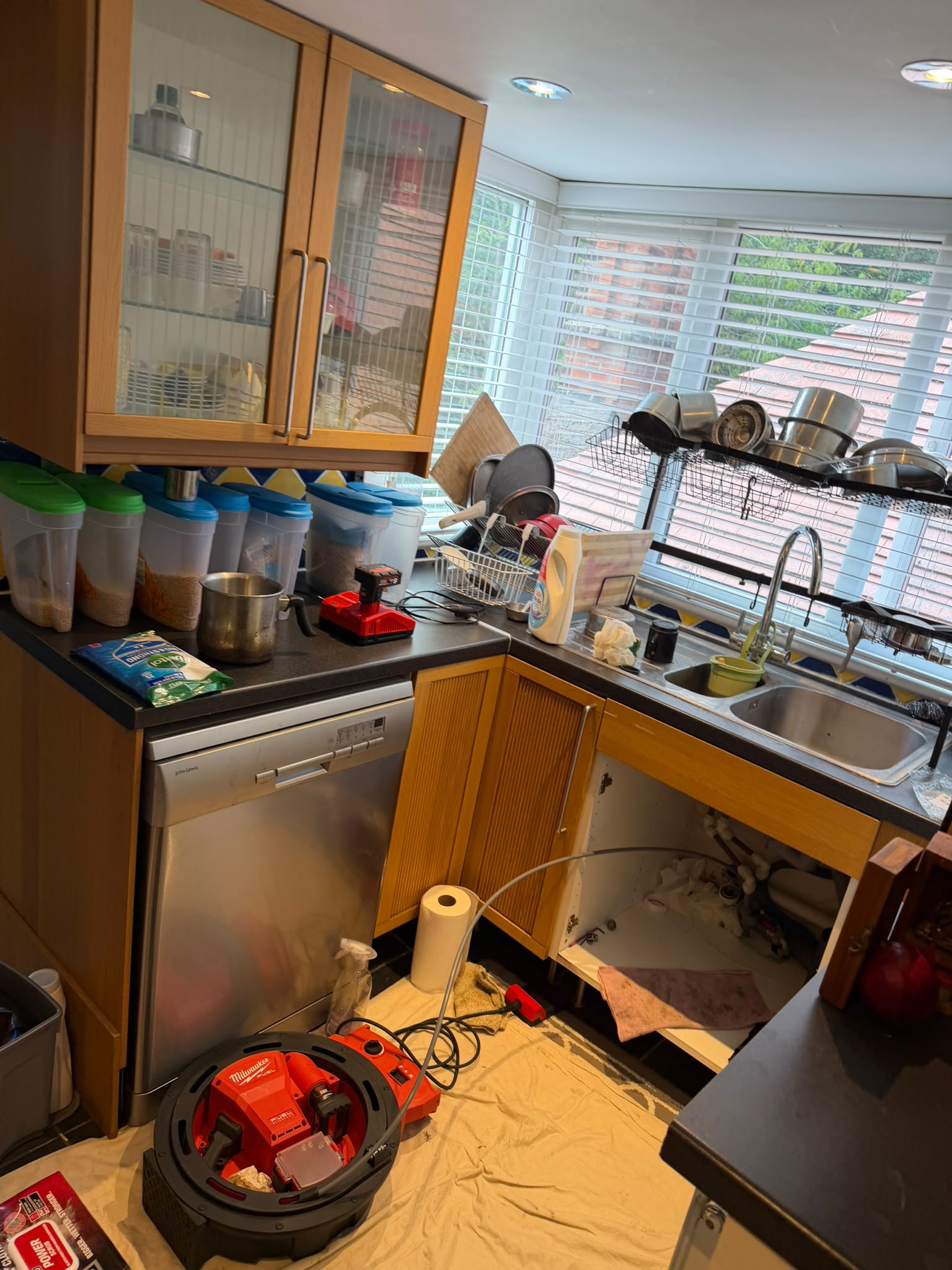
- Use a drain snake. A hand-held snake fed down the waste pipe can hook or break up a blockage beyond the trap. Feed it gently and turn it, never force it.
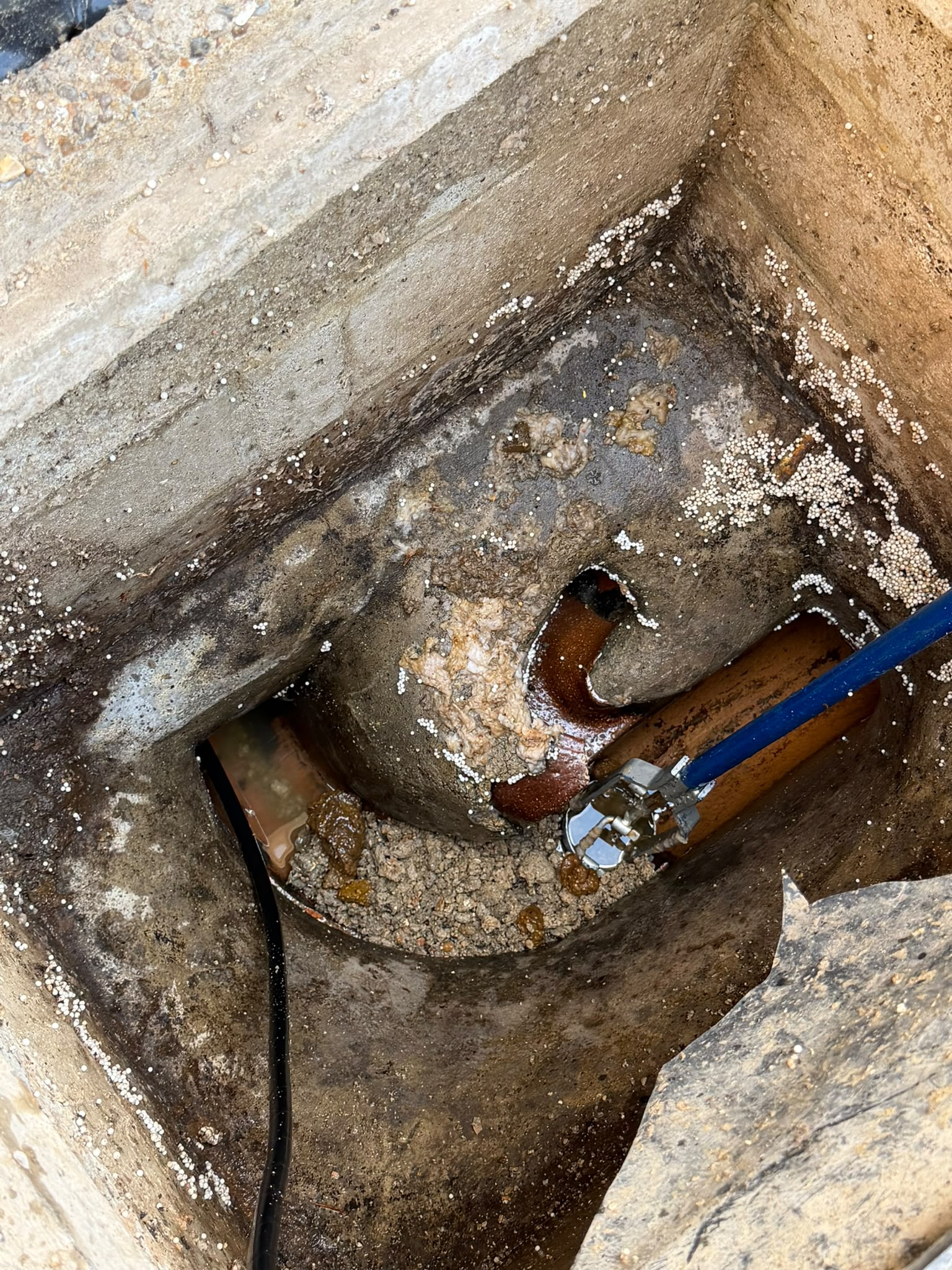
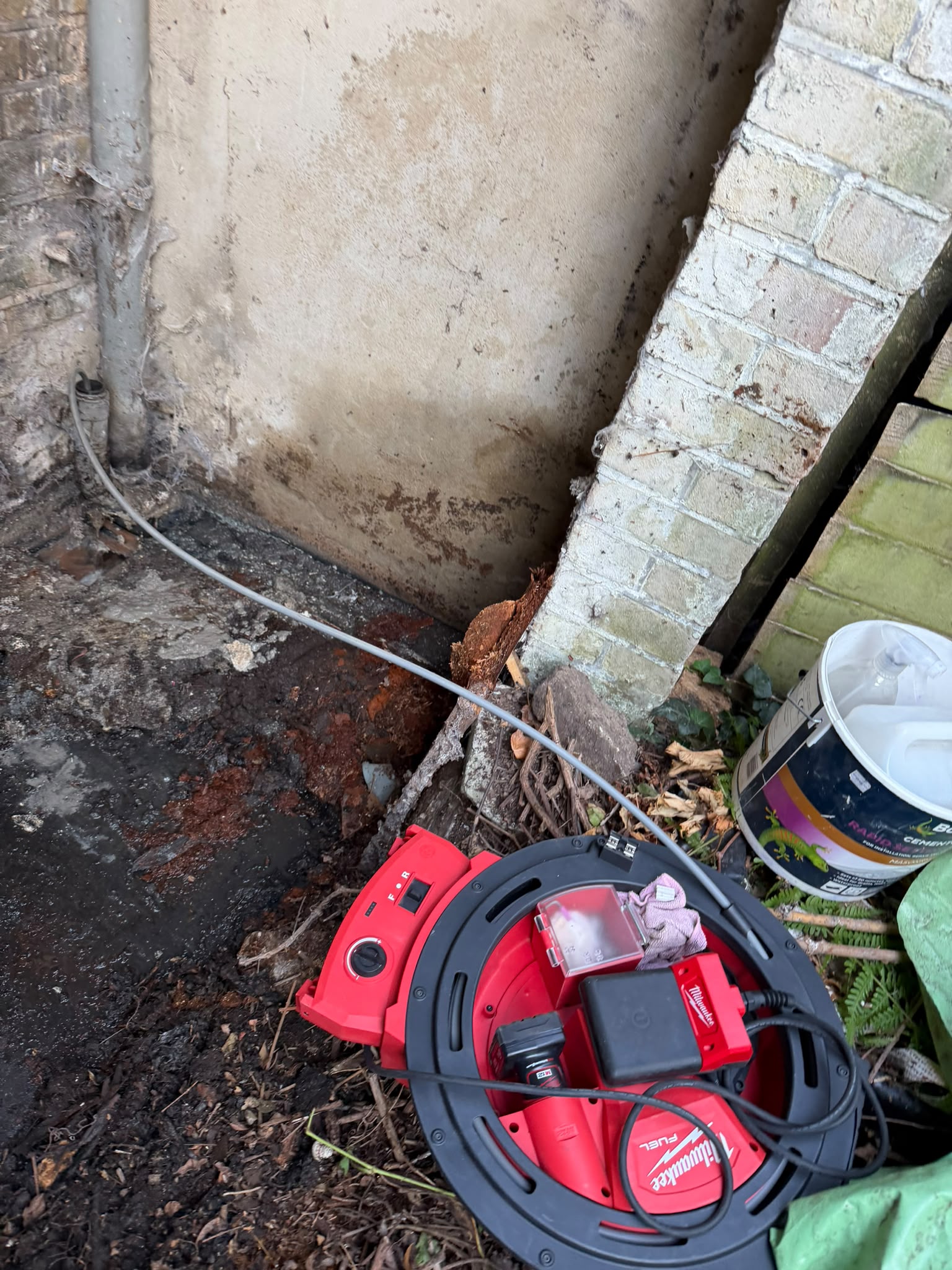
Outside, if a gully or inspection chamber is full, you can lift the drain cover, wearing gloves and eye protection, and work drain rods towards the blockage. Always turn the rods clockwise so the sections do not unscrew inside the pipe. Once the water drops, flush with a hose and refit the cover securely.
Safety points before you start
Most DIY drain jobs are safe if you keep to a few rules. The problems that follow a DIY attempt usually come from shortcuts.
- Never mix chemical cleaners. Combining a chemical unblocker with bleach, vinegar or another product can release harmful fumes or react violently. Use one product, follow the label, ventilate the room, and do not plunge afterwards, because plunging splashes caustic liquid towards your face.
- Avoid chemicals in older pipes and septic systems. Strong products can damage old or weakened pipework and upset a septic tank.
- Keep boiling water away from plastic and porcelain. It can soften plastic waste joints and crack a toilet pan.
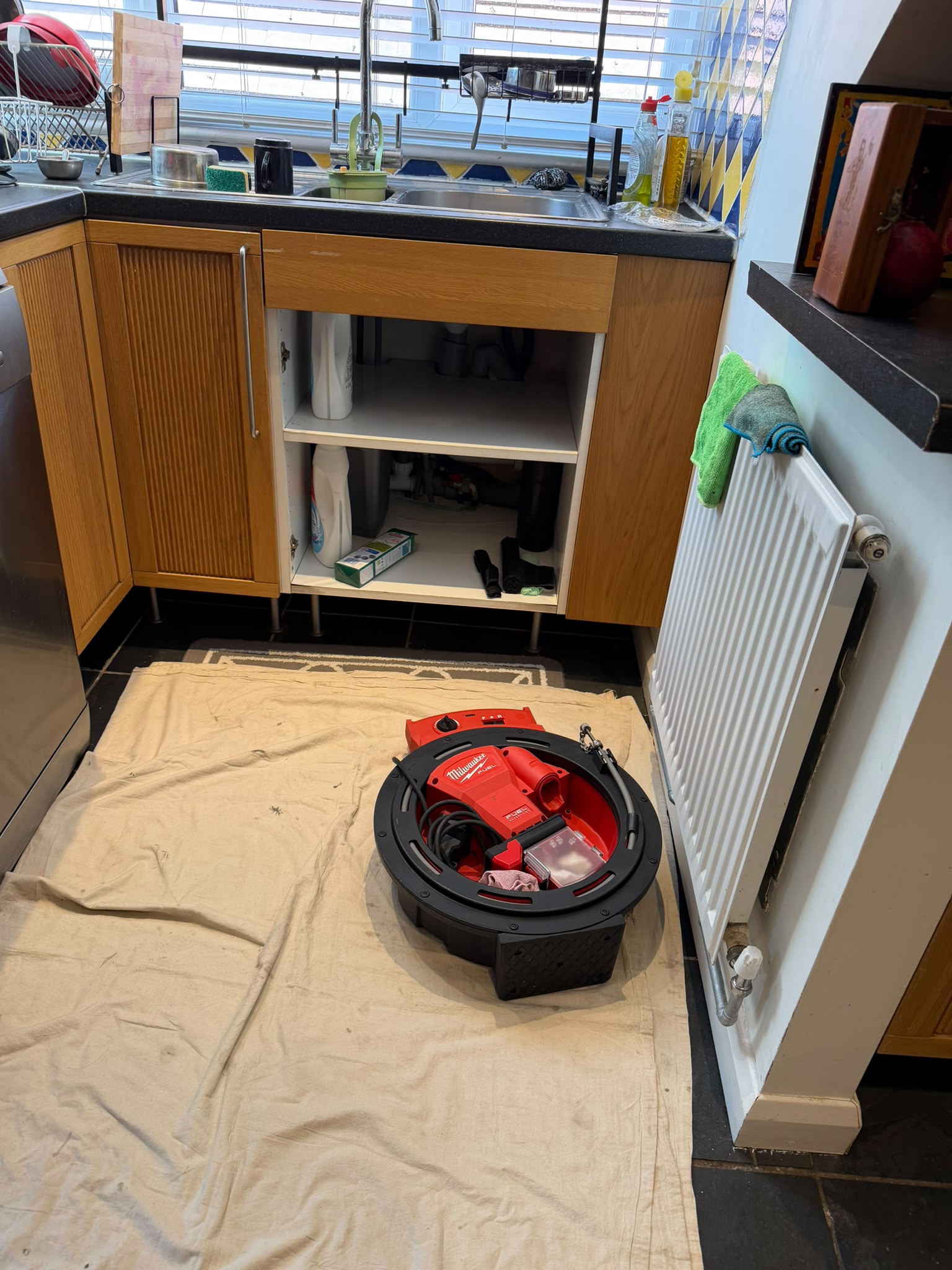
- Leave the pressure washer in the shed. A garden pressure washer can drive the blockage further in, blow dirty water back at you and damage joints. High-pressure jetting needs controlled equipment and a drainage engineer.
- Treat sewage as hazardous. Wear gloves and eye protection, keep children and pets away, and wash thoroughly afterwards.
- Lift covers carefully. Heavy or rusted covers can trap fingers and strain backs, so use a lifting tool or leave them alone.
- Know whose pipe it is. Shared drains and sewers beyond your boundary are usually the water company's responsibility, so check before working on anything that serves your neighbours.
Signs that tell you where the blockage is
Where the water backs up tells you a lot about where the blockage sits, and whether it is yours to tackle.
- One fixture slow, everything else fine: the blockage is in that waste pipe or trap, which is a good DIY job.
- Several fixtures slow, or the toilet gurgles as the sink empties: the blockage is further down, in a shared branch or the main drain.
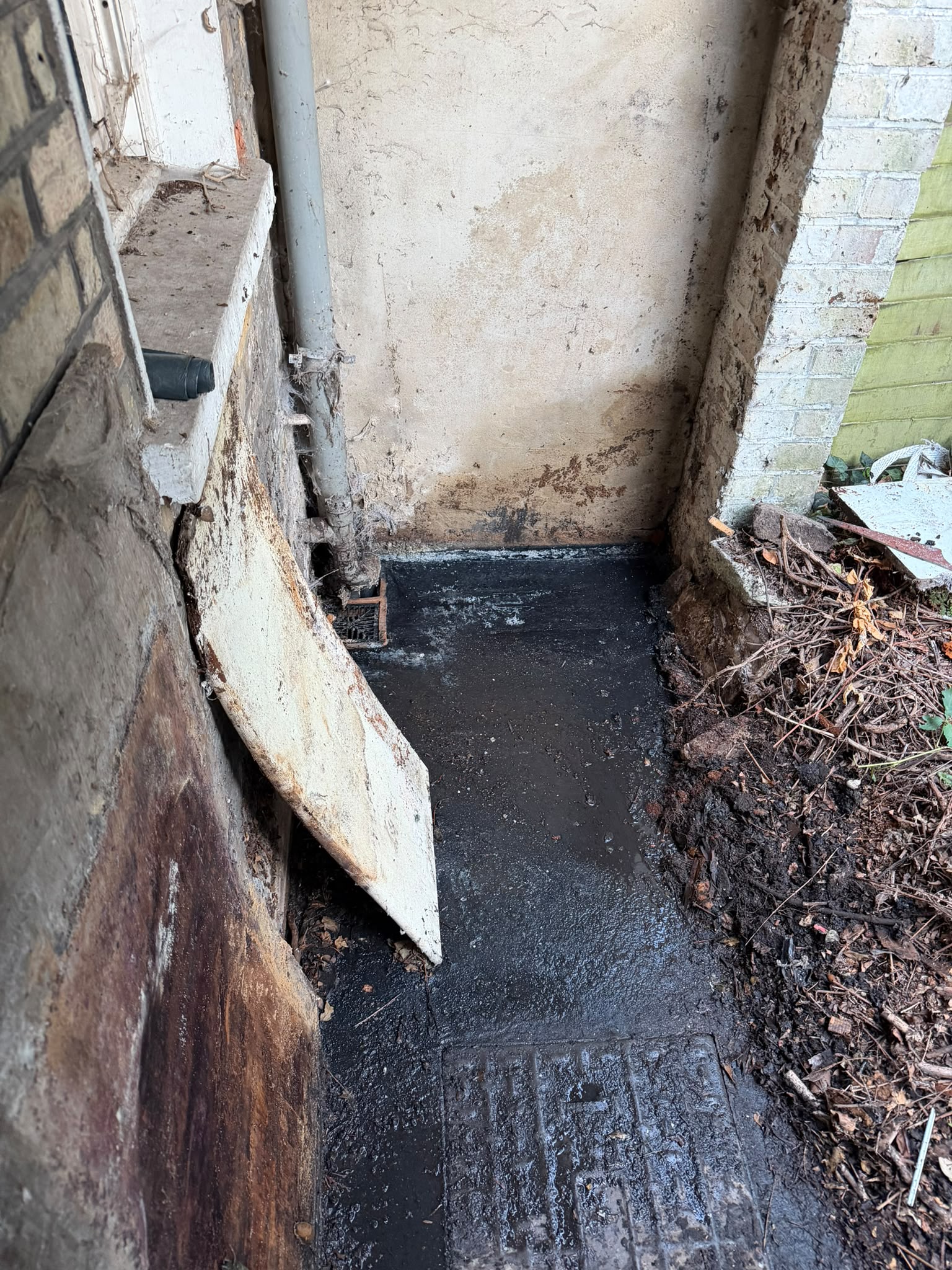
- Standing water or sewage in an outside gully or inspection chamber: the main drain is blocked downstream of that point.
- Water rising in the shower tray when the toilet flushes: a main drain blockage that will not clear from indoors.
- Smells that return after cleaning: often fat build-up or a dry trap, sometimes a cracked pipe.
Some signs point to damage rather than a simple blockage: a blockage that returns weeks after you clear it, damp patches or sunken ground over the drain run, rats in the garden, or rods meeting a hard stop and coming back with soil or root fragments. A collapsed or root-damaged pipe will not be fixed by rodding, and repeated attempts can make it worse.
What to do if the drain will not clear
Stop once you have tried the plunger, the trap and a snake without result, or the moment sewage is involved. Note what you have seen: which fixtures are affected, whether outside chambers are full, and what you have already put down the drain, especially any chemicals, so the engineer can work safely.
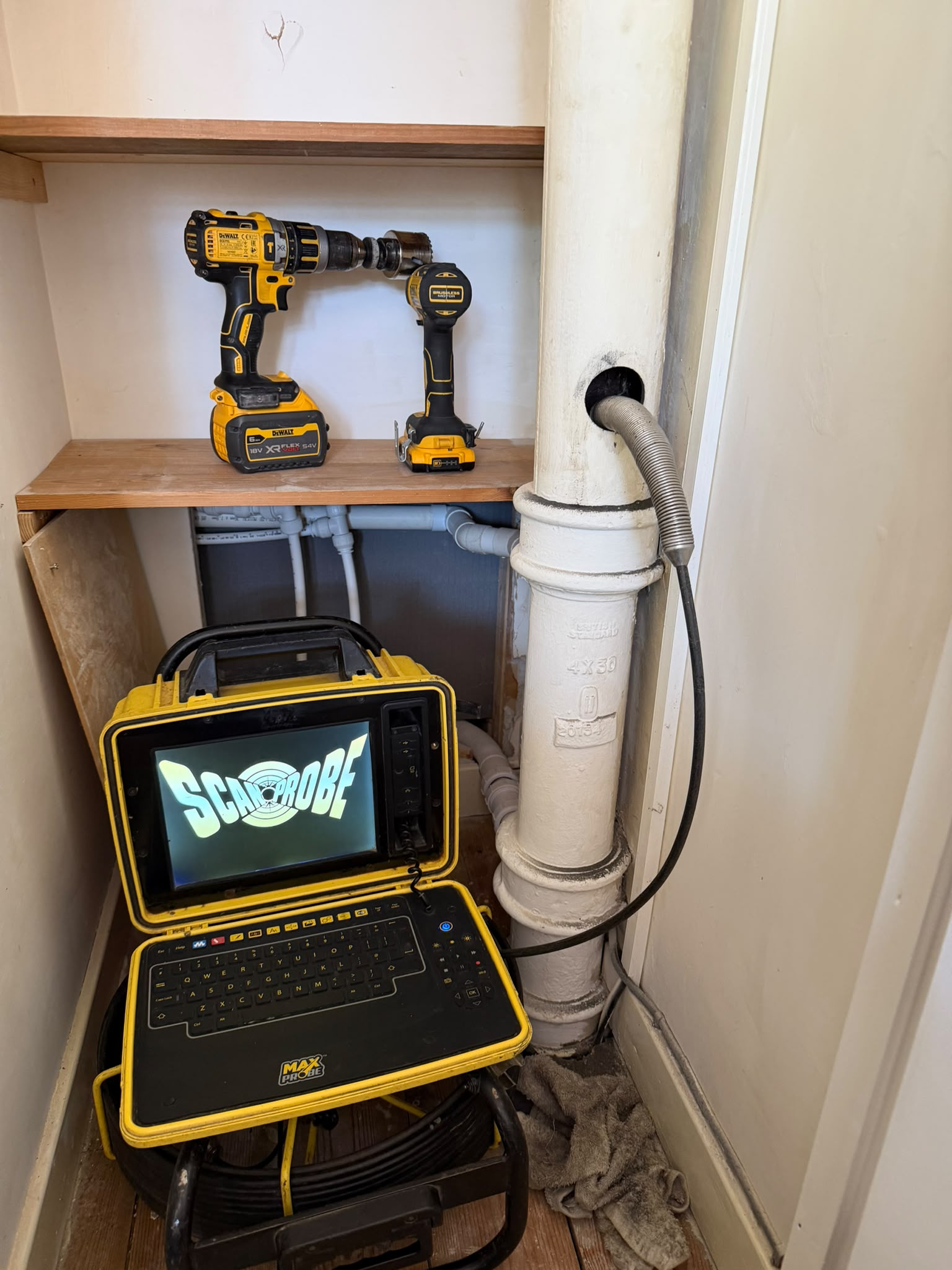
Our expert drainage engineers clear the blockage with proper drainage equipment, and where a fault keeps returning they use CCTV drain cameras with sonar pipe location to see inside the pipe rather than guessing or digging. If the camera shows a crack, root intrusion or a collapse, that becomes a drain repair, and we explain what we have found before any work goes ahead, with a clear written quote and no surprises.
Because the engineers live and work locally, someone can usually reach you the same day, and if you want a drainage engineer near you anywhere across Surrey, London and the South East, one of the team will not be far away. Our blocked drain services cover homes and businesses, including hotels and hospitality premises where a blockage cannot wait.
Drain still backing up after the plunger and the snake? Get in touch with Heating Services Ltd and an engineer will find the cause and put it right.
What decides the answer in your home
Whether a DIY fix will work for you comes down to a handful of things.
- Where the blockage is. Within reach of the plughole or trap, usually yes. Beyond the house, usually not.
- What it is made of. Hair and soap give way. Set fat, wet wipes and sanitary items often do not, and toys or building debris need proper equipment.
- The age of the pipes. Older clay drains, common under Victorian and Edwardian homes across London, crack and let roots in, so a blockage there is often a symptom of something else.
- Access. Whether you can reach an inspection chamber, and whether the cover is safe to lift.
- How often it happens. A one-off blockage clears and stays clear. A recurring one needs a look inside the pipe.
Prevention keeps you out of this altogether: a strainer over the shower and sink plughole, fat wiped into the bin rather than poured away, nothing but paper flushed, and hot water down the kitchen sink every week or so. Regular drain cleaning keeps busy kitchens and older drainage running clear.
Drain still backing up after the plunger and the snake? Get in touch with Heating Services Ltd and an engineer will find the cause and put it right.