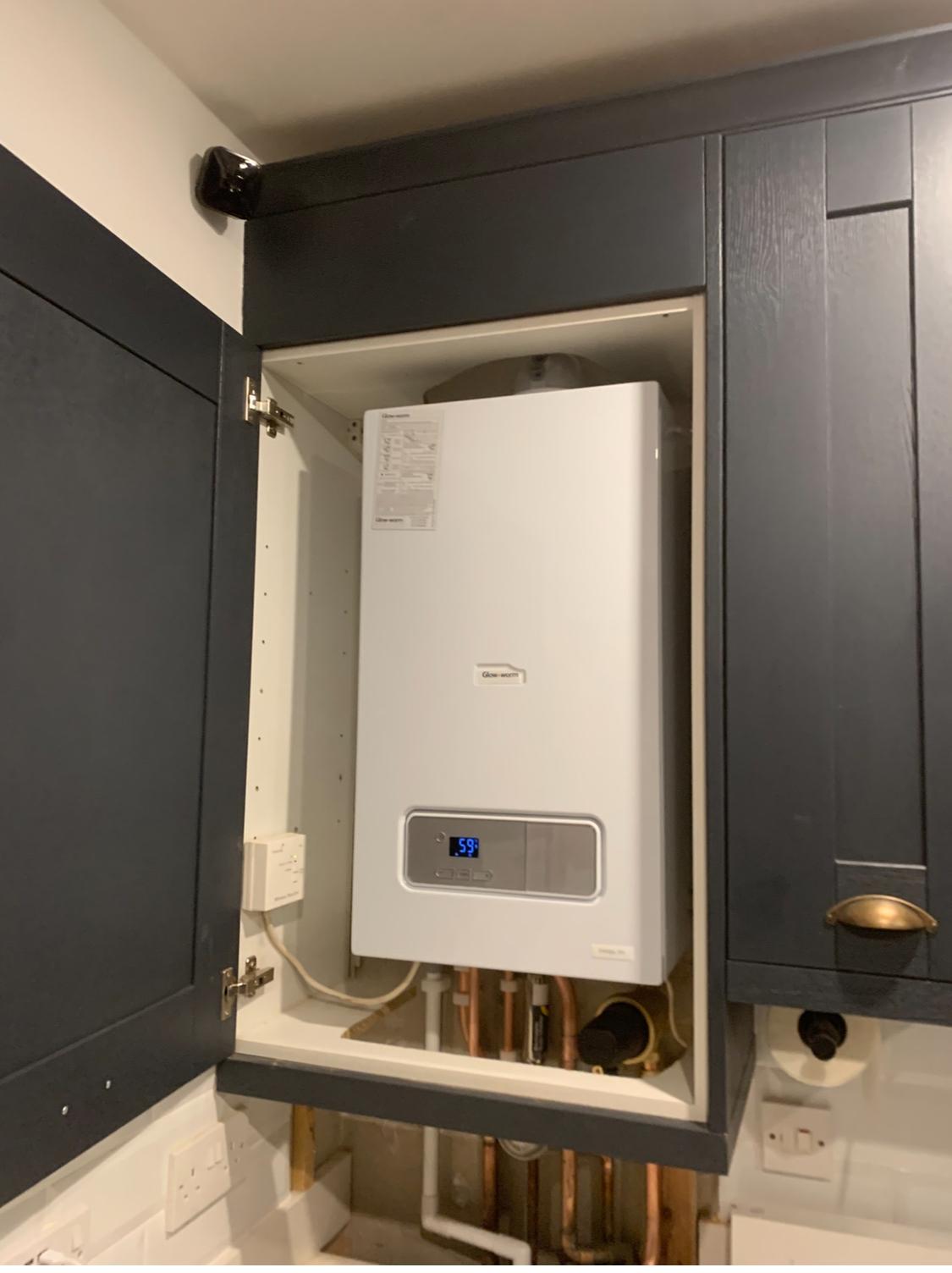
Right now the upstairs radiators are lukewarm, the boiler grumbles when it fires and the house takes half the morning to feel warm. After a powerflush, the panels heat evenly top to bottom, the noise stops and the rooms come up to temperature in the time they should.
Key Takeaways
- A powerflush strips black iron sludge, rust and grit out of the boiler, radiators and pipework so water circulates freely again.
- Cold at the bottom of a radiator, kettling from the boiler or slow warm-up are the usual signs a central heating flush is due.
- Price is driven by radiator count, system type and access, and it is confirmed in writing before any hose is connected.
- Every flush finishes with corrosion inhibitor, and a magnetic filter can be fitted on the return to protect the heat exchanger.
- One engineer sees the job through from temperature survey to handover, so accountability is clear throughout.
- Morden's 1930s semis and post-war flats often have original steel panels and untreated water, which is exactly where sludge builds.
Heating Services Ltd was established in 2008 and David, who leads the team, has over 21 years' experience in the trade; the same locally based Gas Safe engineers who handle power flushing also work as your boiler engineer in Morden, and the many five-star reviews on the widget come from that work.
Call Heating Services Ltd today and one of the team will book your powerflush.
What a Powerflush Does
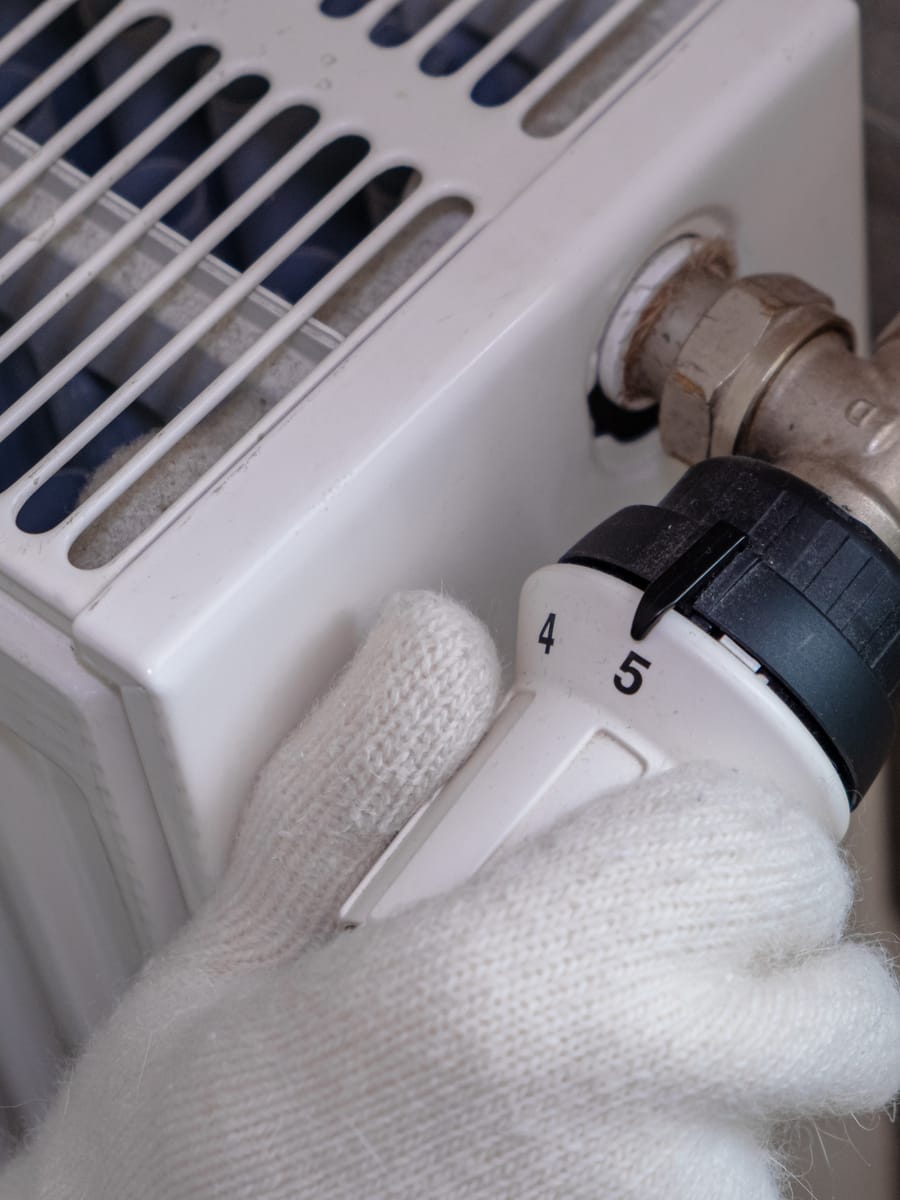
A powerflush answers the question people ask first: it clears sludge, rust and debris out of the central heating system so water moves properly again through boiler, pipework and radiators. That is the whole job in one line.
Open a drain point on a 1930s Morden semi that has never been cleaned and what comes out is not water. It is black iron sludge, thick as gravy, carrying grit that has been circulating since the system was filled. That deposit settles in the bottom of the radiators and in the low points of the pipework, and it narrows the waterways in the heat exchanger. Heat cannot pass through it.
Sludge, rust and where it collects
Iron oxide forms whenever untreated water sits against steel radiator panels. It does not stay in suspension. Gravity drops it into the bottom third of each panel and into the horizontal legs under the floorboards, which in the suburban housing round Crown Lane and Lower Morden are often original runs in 15mm copper. Once the deposit is deep enough, the flow takes the easy route past it and the far end of the circuit gets cold.
The pumping unit and the chemicals
The flush itself uses a pumping unit connected across the system, usually at the boiler or at a radiator tail. It drives water at high velocity, reverses the direction on command, and lifts the deposit rather than pushing it further in. Cleaning chemical goes in first and is circulated warm to break the bond between sludge and metal. Each radiator is then isolated and worked one at a time, tapped along the bottom to shift what has hardened. Corrosion inhibitor goes in last, once the water runs clear.
What it will not do
Honesty matters more than sales here. A power flushing job will not repair a seized pump, a failed diverter valve or a blocked plate heat exchanger that has gone past cleaning. Nor will it cure a radiator that is cold because the lockshield was never balanced. That is why the visit starts with a test of flow and return temperatures across the system, so the cause is known before the pump comes off the van. A flush fixes circulation, not broken parts.
Call Heating Services Ltd to book a Powerflush in Morden and get a written price based on your radiator count before any work starts.
Powerflush Pricing and What Affects Cost
Every quote for a central heating flush comes back to one count: how many radiators, and how bad the water is. A two-bed post-war flat off London Road with six panels is a different day's work from a four-bed semi with twelve panels, a towel rail and a converted loft circuit.
What moves the price
The number of radiators is the main figure. After that comes system type, because an open-vented system with a feed and expansion tank behaves differently from a sealed combi circuit, and a gravity-fed cylinder loop adds another leg to clean. Access matters too: boxed-in pipework, radiators bled into by decorators and painted-over valves all add time. Where a magnetic filter is fitted, or wanted, that is priced as a separate line so you can see it.
A written price before work starts
Nobody should be guessing at the end of the day. The system is looked at, the radiator count is taken, the water is checked, and a fixed price is put in writing before anyone connects a hose. If something unexpected turns up, a weeping valve tail or a radiator that is beyond saving, you are told then, with the cost, and you decide. Heating Services Ltd has run its powerflush services on this basis since the company was established in 2008.
Value against the alternative
A clean system runs at a lower gas volume for the same room temperature, and a boiler that is not straining against restricted flow tends to last longer. On a badly sludged circuit the honest advice is sometimes a partial pipework renewal or, occasionally, replacement of one tired radiator instead. You get told which. No price is a surprise.
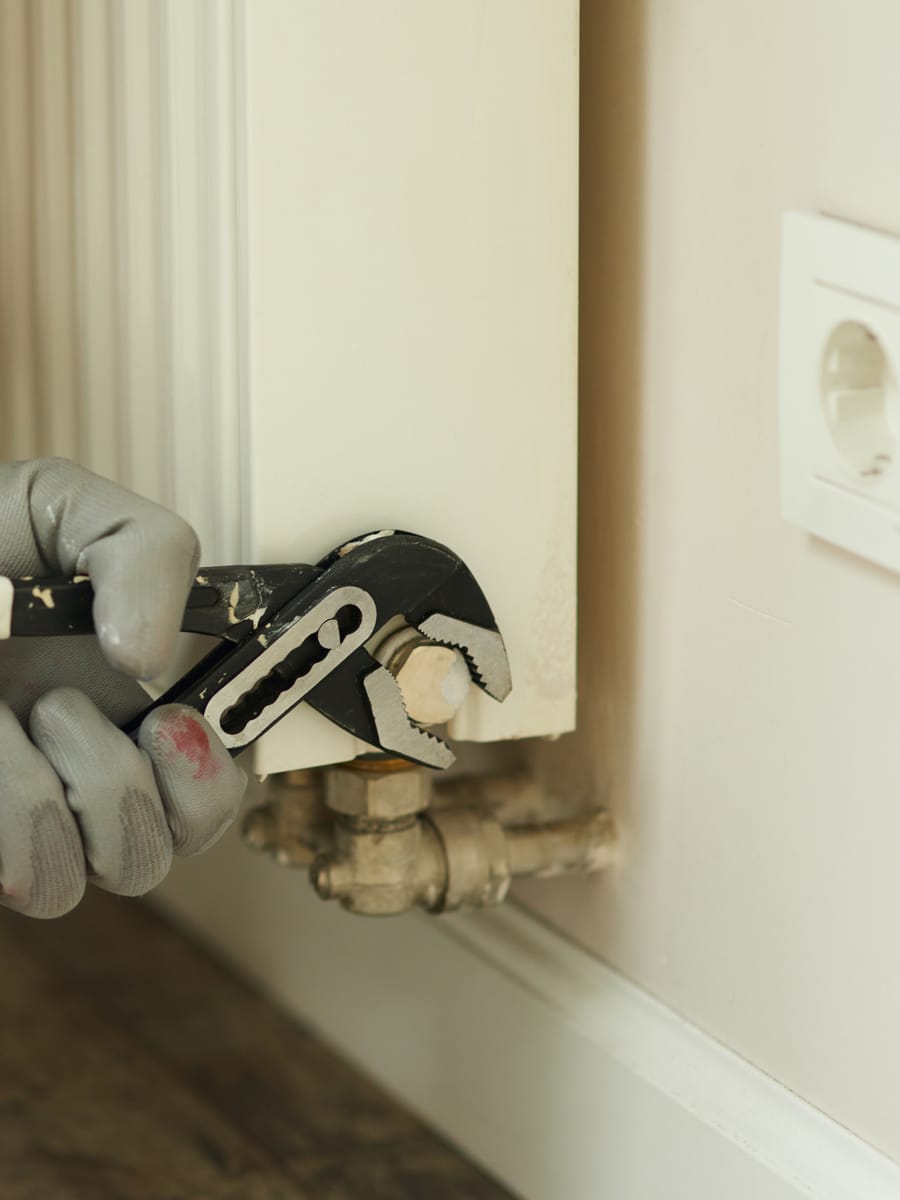
Signs Your Heating System Needs a Powerflush
The symptoms show up in the fabric of the house before they show up on a gauge. Cold patches on plaster above a radiator, a landing that never warms, a floorboard that ticks when the heating fires: those are all circulation signs.
Cold at the bottom, hot at the top
Put a hand on a panel twenty minutes after the boiler fires. Hot across the top and cold along the bottom edge means deposit has filled the lower waterways. Bleeding will not help, because the problem is not air. Air gives you the opposite pattern: cold at the top, hot below.
Noise from the boiler and the pipes
Kettling is the sound of water boiling in a restricted heat exchanger. Banging and knocking under the floor is usually flow noise round a partial blockage or a pump working harder than it was designed to. Both point at the water rather than the appliance, and both get worse if they are left.
Slow warm-up and poor hot water
If the house takes an hour to reach temperature when it used to take twenty minutes, or the hot water flow rate has dropped off on a combi, the circuit is carrying restriction. On older Morden properties in the SM4 area the pattern is common: original steel panels, decades of top-up water, no inhibitor ever added. Dirty water always tells you first.

Book a Powerflush Appointment in Morden
Most jobs here start with a radiator that went cold in October. David heads a team of local Gas Safe engineers, all directly employed rather than subcontracted, working across Surrey, London and the South East, and one of them is usually the nearest person to your street.
How the visit is sequenced
The order is fixed so nothing gets skipped. First, a temperature survey across flow, return and every radiator, plus a look at the water drawn from a drain point. Second, the written price. Third, the flush, radiator by radiator, with the pumping unit reversed on each circuit. Fourth, the inhibitor dose and, where fitted, the magnetic filter checked and cleaned. Fifth, a rebalance of the lockshield valves and a handover showing you the temperatures on the panels that were cold. One named engineer stays with the job from survey to handover, so there is no question over who is accountable.
Getting someone out quickly
If you have been searching for a heating engineer near you in Morden, the engineers are based locally rather than driving down from the far side of the county, which is why a breakdown call in the morning can often be attended the same day. A powerflush is normally booked for a full working day, and most systems are finished within it. Larger properties near Morden Park with two circuits can run longer, and you will be told that at the quote stage rather than at four in the afternoon.
What you need to do
Clear access to the boiler and to each radiator, and someone in the house for the handover. Floor coverings are protected before the hoses come in. Water is drawn off at a controlled rate, not dumped, which matters on properties near the Wandle corridor by Morden Hall Park where surface drainage is sensitive. Everything is left as it was found.
Powerflush for Boilers, Radiators and Pipework
Three different metals, three different problems. The boiler side is aluminium or stainless steel with narrow waterways. The radiators are pressed steel. The distribution is copper, sometimes with plastic barrier pipe added during a later extension. Sludge behaves differently in each.
Protecting the boiler after the flush
A modern condensing heat exchanger has passages narrow enough that a spoonful of debris will restrict them. That is why the appliance is isolated and flushed on its own leg, and why a magnetic filter on the return is worth fitting: it catches iron particles before they reach the exchanger. Gas work on the appliance itself is carried out by engineers on the Gas Safe Register, which is the legal requirement for anyone working on gas appliances in your home.
Radiators, valves and old pipework
The worry with an older system is that pressure will find a weak spot. It is a fair worry. Pre-war and inter-war properties in Merton Park often still have some original valve tails and the odd length of imperial pipe. The unit is run at high velocity but low pressure, which is what lifts deposit without stressing joints, and any tail already weeping is identified in the survey and reported before the pump is connected. If a radiator is corroded through from the inside, flushing it is the wrong answer and replacement is the right one.
When repair or installation is the better call
Sometimes the flush is one part of a bigger picture. The same engineers handle boiler repair and full boiler installation, radiator replacement and system upgrades, so if the survey shows a failed pump, a dead zone valve or an appliance at the end of its service life, the work carries on with the same team rather than being handed off. Installation work comes with up to a 10-year guarantee on the appliance. Commercial premises are covered too, including hotel and hospitality sites where heating downtime costs money, and there are engineers covering Morden town centre and the surrounding streets.
Clean water in, proper heat out. That is the job.
Call Heating Services Ltd to book a Powerflush in Morden and get a written price based on your radiator count before any work starts.
People Also Ask: Powerflush in Morden
How much should a powerflush cost in Morden?
It depends chiefly on how many radiators are on the system, whether it is sealed or open-vented, and how heavily sludged the water is. A six-panel post-war flat off London Road is less work than a twelve-panel 1930s semi with a loft circuit. The system is surveyed, the radiators counted and a fixed price given in writing before work begins, with any magnetic filter shown as its own line. For the longer answer, see How much should a powerflush cost?
How long does a powerflush take on a Morden semi?
Most typical properties are a single working day. Each radiator is isolated and flushed individually, the pumping unit is reversed on each circuit, then inhibitor is dosed and the valves rebalanced. Larger houses near Morden Park with two heating circuits or a cylinder loop can take longer, and that is confirmed at the quote stage rather than on the day. We set out how long it takes to do a powerflush in a separate guide.
Will a powerflush damage old radiators or pipework?
The unit works at high velocity and low pressure, which lifts deposit without stressing joints, so sound pipework and valves are unaffected. Older properties sometimes have a weeping valve tail or a panel already corroded from the inside. Those are found during the survey and reported to you first, with replacement recommended where flushing is the wrong answer.